For years, “women at work” conversations began and ended with maternity leave. In 2026, that’s no longer true.
Employers across Australia, Ireland, and APAC are rewriting the playbook moving past compliance check boxes toward leave and benefits designed around every stage of a woman’s life, from menstrual health to menopause, from fertility treatment to eldercare. The organizations getting this right aren’t just doing the right thing. They’re winning the talent war.
1. The New Leave Portfolio
Four categories of leave are gaining ground in 2026 workplaces:
Health & life-stage leaves
- Menstrual leave — one to two paid days a month, already established in Japan and Spain, with pilots underway at APAC startups
- Fertility and IVF leave — increasingly standard in Australian and Singaporean tech companies
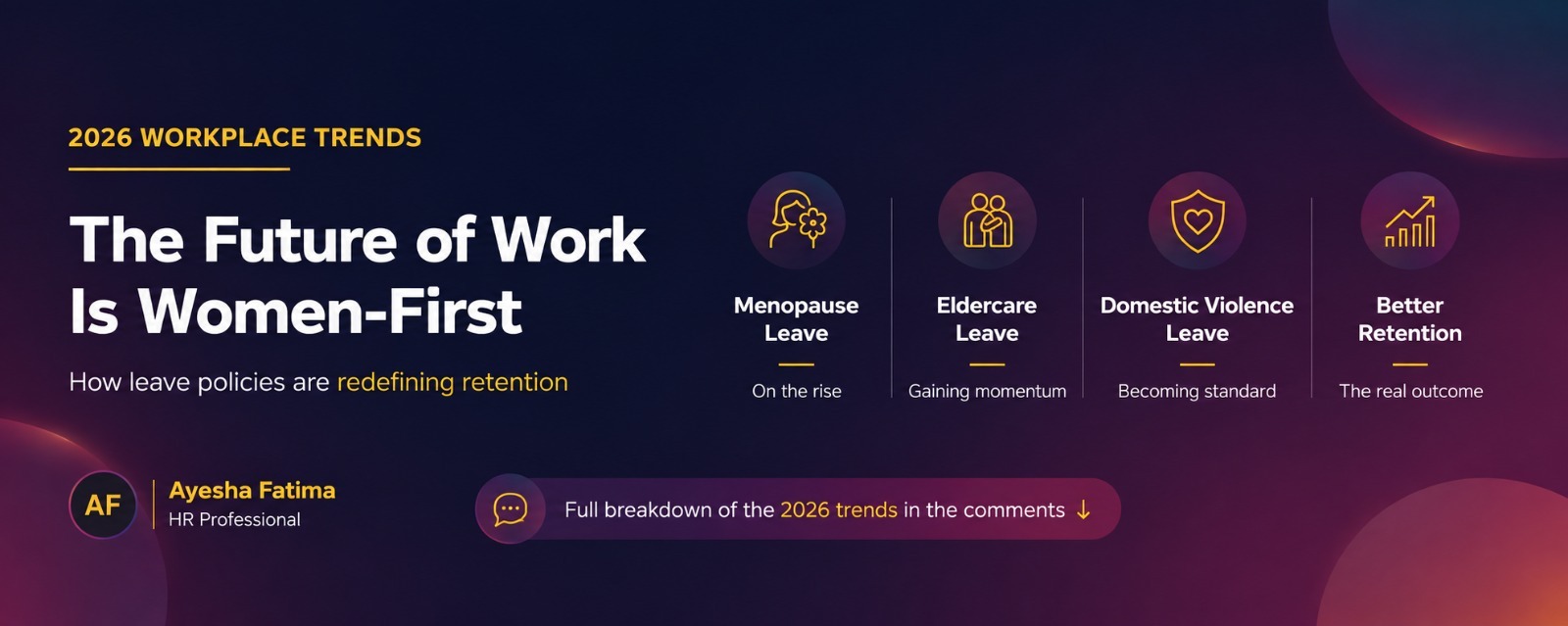
- Menopause leave — paid days plus workplace adjustments (flexible hours, temperature control, uniform changes), one of the fastest-growing new benefits this year
- Pregnancy loss leave — dedicated time to grieve and recover, adopted by New Zealand and a growing number of Australian employers
Family & care leaves
- Enhanced maternity and secondary caregiver leave — extended full-pay maternity leave paired with paid partner leave, designed to help women return to work with more support at home
- Childcare and school leave — paid time for sick children or school events, common in Ireland and Australia
- Eldercare leave — women shoulder the majority of eldercare responsibilities globally, and paid eldercare days are becoming a standard line item in benefits packages
Safety & wellbeing leaves
- Domestic violence leave — paid leave plus counseling support, now law in Australia and considered best practice in Ireland
- Mental health days — kept separate from standard sick leave, recognized as key to burnout prevention
Career support
- Returnships — paid, structured programs to help women restart careers after a break
- Radical flexibility — genuinely flexible, outcome-based work design rather than token remote-work policies
2. Australia and Ireland Are Leading
Great Place to Work released its 2026 list of Australia’s Best Workplaces for Women in March, recognizing 50 organizations — including Adobe, Docusign, Prospa, and Mattel — that qualified based on confidential employee feedback, representation data, and Workplace Gender Equality Agency insights. To even qualify, companies needed at least 100 employees, with women making up a minimum of 30% of the workforce and 20% of management.
What distinguishes the companies on this list isn’t size or industry. It’s a deliberate commitment to pay transparency, flexible work design, and structured mentorship and sponsorship for women moving into decision-making roles.
Ireland is following a similar path, embedding domestic violence leave, childcare support, and menopause policies into total rewards packages. The message from both countries is consistent: support at work has to extend to support at home.
The underlying idea both share: equity doesn’t happen by waiting. It happens by design.
3. APAC Is Catching Up Fast
While Australia and Ireland are ahead, the rest of APAC is closing the gap:
- Japan and South Korea already have menstrual leave and childcare support in place
- Singapore and Hong Kong are expanding fertility benefits and return-to-work programs for caregivers
- India is seeing courts push maternity rights forward — the Telangana High Court ruled in July 2026 that a woman who had twins during her first pregnancy cannot be denied maternity leave for a second pregnancy, holding that a multiple birth is a single biological event, not two deliveries
- Southeast Asia is adopting mental health days and hybrid work as retention tools
The pattern across the region is a shift from compliance to genuine care.
4. For Employers
More benefits on paper doesn’t automatically translate into more confidence or trust from your workforce. What actually moves the needle is access, clear communication, and follow-through.
A practical starting point:
- Introduce a small number of dedicated wellness days for women each year
- Offer flexible hours around periods and menopause
- Train managers to have these conversations without awkwardness or stigma
None of this requires a large budget. It requires intent — and a willingness to actually use the policies you put in place.
5. For Employees
Your health, your family, and your career aren’t separate tracks — they intersect constantly. Ask for what you need, and help normalize the conversation at your workplace. The organizations getting this right in 2026 are the ones actually listening.
The future of work isn’t gender-neutral. It’s gender-intentional — and it starts with how leave is designed.
Global People Operations Leader with 10+ years of experience across APAC and remote-first organizations. Specializing in Workday, employee lifecycle management, and people-first HR operations. Connect on LinkedIn