Ayesha Fatima is a People Operations leader with experience managing HR across APAC for a global B Corp-certified digital agency operating in over 40 countries. She holds CHRP and SHRM-CP certifications and is currently studying AI governance. Her work spans HRIS administration, employee lifecycle management, performance operations, and multi-country HR compliance.
Executive Summary
The integration of AI into HR operations creates a fundamental tension between efficiency and human experience. This article examines the ethical dimensions of AI-driven HR, analyses the evidence on how AI deployment affects employee trust and engagement, and argues that the most effective AI implementations are those designed to serve employees, not just organisational efficiency.
The Efficiency Trap
The business case for AI in HR is typically framed in efficiency terms: faster screening, automated scheduling, reduced administrative burden, lower cost per hire. These metrics are real and valuable. But they are incomplete. Efficiency measures capture what AI does to processes. They do not capture what AI does to people.
Gartner’s 2024 research found that candidates who perceive AI-powered hiring as opaque are 38 percent less likely to accept an offer. Deloitte’s 2026 Human Capital Trends report identifies the need to shape work in the human-machine era as a top priority. These findings suggest that AI implementations optimised exclusively for efficiency may undermine the human outcomes they were intended to improve.
The ethical question at the heart of AI in HR is not whether the technology works. It is who the technology is designed to serve. When an AI system reduces time-to-hire by 40 percent but creates an impersonal experience that damages employer brand, the efficiency gain has been purchased at a cost that does not appear on any dashboard.
Designing AI for Employees, Not Just Employers
The most effective AI implementations in HR share a design principle: they augment human capability rather than replace human judgment. This distinction is operational, not philosophical. An AI system that presents a hiring manager with a shortlist of qualified candidates, accompanied by transparent reasoning for each recommendation, augments the manager’s judgment. An AI system that ranks candidates and expects the manager to accept the ranking replaces judgment with compliance.
Research in the California Management Review by Tambe, Cappelli, and Yakubovich (2019) found that AI in HR is most effective when it operates as a decision support tool within a human-led process, rather than as an autonomous decision-maker. The authors argue that the complexity and context-dependence of employment decisions make them fundamentally unsuitable for full automation.
In my experience across global organisations, the AI deployments that generate the highest employee satisfaction are those where employees understand the AI’s role, trust the human oversight, and have recourse when they believe the AI’s output does not reflect their situation accurately.
The Moments That Cannot Be Automated
Performance conversations. Career development discussions. Accommodation requests. Conflict resolution. Grief support. Return-to-work planning after medical leave. Termination conversations. These are the moments where the quality of the human interaction determines whether the employee’s experience of the organisation is one of trust or betrayal.
No AI system, regardless of its sophistication, can navigate these moments with the empathy, cultural sensitivity, and moral judgment that a skilled HR professional brings. The MIT Sloan Management Review has noted that the highest-value HR activities are precisely those that resist automation because they require what machines cannot provide: genuine human understanding.
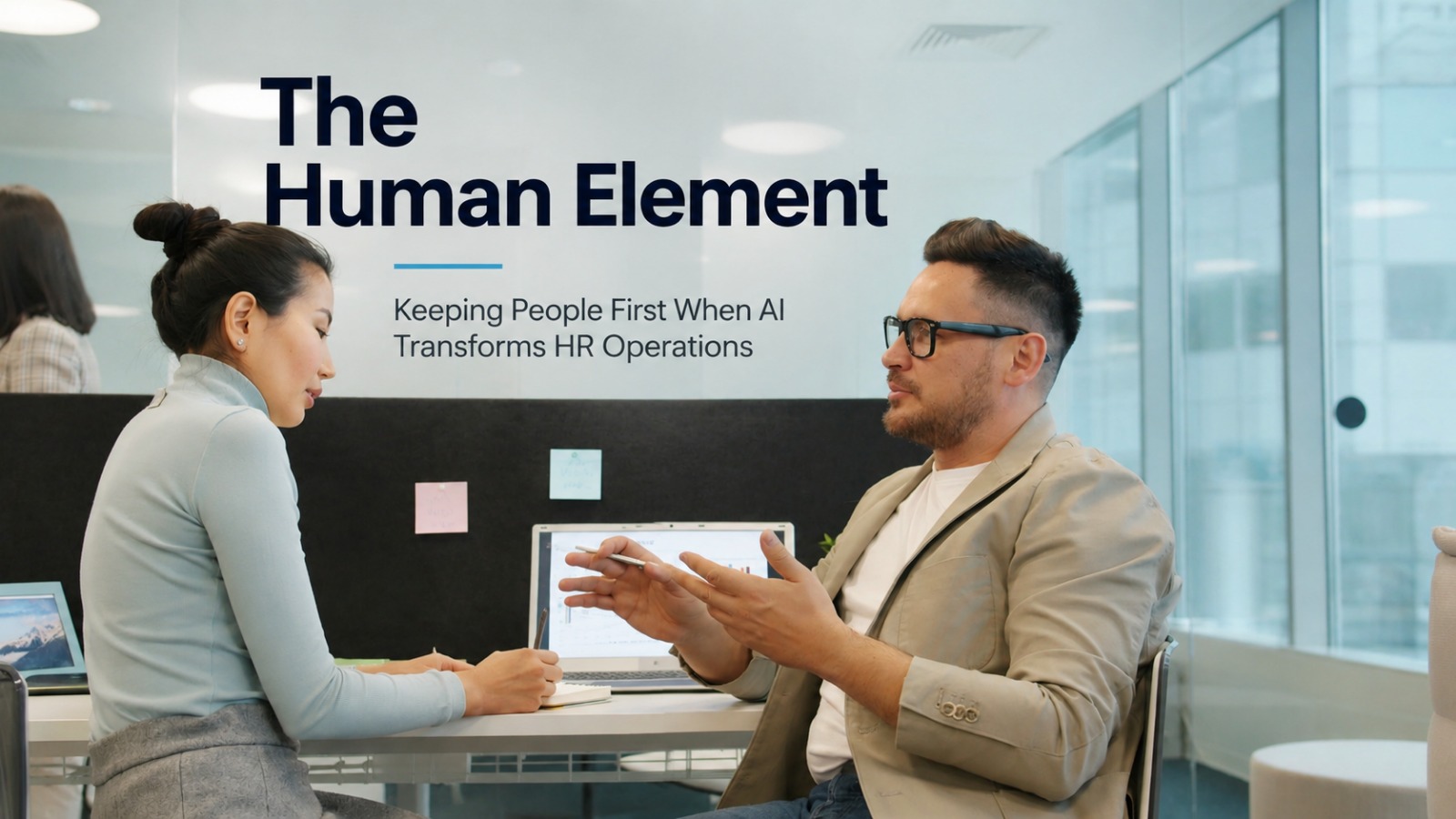
The strategic implication is clear: AI should be deployed to free HR professionals from the administrative burden that prevents them from being present in these consequential moments. When an HR leader spends their day processing routine transactions, they are unavailable for the moments that define the employee experience. Automating the routine to enable the human — that is the correct design principle.
Conclusion
The organisations that get AI right in HR will be the ones that never forgot the H stands for Human. Not because they rejected AI, but because they deployed it with a clear answer to the question: who does this system serve? When the answer is employees — their experience, their trust, their development, their dignity — AI becomes a powerful tool for building the kind of workplace where people want to stay and grow. When the answer is only efficiency, AI becomes another system that people endure rather than value.
About the Author
Ayesha Fatima is a People Operations leader with experience managing HR across APAC for a global B Corp-certified digital agency operating in over 40 countries. She holds CHRP and SHRM-CP certifications and is currently studying AI governance. Her work spans HRIS administration, employee lifecycle management, performance operations, and multi-country HR compliance.
The views expressed are my own and do not necessarily reflect the views of my employer.
Assisted by AI, reviewed and approved by me.
References
Tambe, Cappelli & Yakubovich. (2019). AI in HRM. Cal. Mgmt. Rev.
Gartner. (2024). Candidate Experience in AI Hiring.
Deloitte. (2026). Human Capital Trends.
MIT Sloan. (2025). Human Side of AI Governance.
SHRM. (2026). State of AI in HR.
HBR. (2024). AI and Employee Trust.
PwC. (2025). Global Workforce Survey.
Global People Operations Leader with 10+ years of experience across APAC and remote-first organizations. Specializing in Workday, employee lifecycle management, and people-first HR operations. Connect on LinkedIn