Executive Summary
AI-powered recruitment tools promise unprecedented efficiency in candidate sourcing, screening, and assessment. The evidence, however, reveals persistent risks of algorithmic bias that can violate employment discrimination law, damage employer brand, and exclude qualified candidates from protected groups. This article examines the regulatory framework governing AI in hiring, analyses documented cases of AI recruitment failure, and provides a practical compliance framework for HR professionals.
The Promise and the Problem
The appeal of AI in recruitment is straightforward. Applicant tracking systems powered by machine learning can process thousands of applications in minutes, identify patterns in successful hires, and score candidates against role requirements with apparent objectivity. LinkedIn’s 2024 Global Recruiting Trends report found that 67 percent of hiring professionals believed AI would be the most impactful technology in talent acquisition.
The problem is equally straightforward: AI systems learn from historical data, and historical hiring data reflects decades of human bias. When an algorithm is trained on a dataset where, for example, 85 percent of successful engineering hires were male, the system learns to prefer male candidates — not because it has been programmed with gender bias, but because the patterns in historical success data are gendered.
The most widely cited example remains Amazon’s experimental AI recruitment tool, which Reuters reported the company abandoned in 2018 after discovering the system systematically downgraded resumes containing words associated with women, including the names of women’s colleges. The system had learned from a decade of hiring data in which men predominated in technical roles, and it faithfully reproduced that pattern at algorithmic scale.
This is not an isolated case. Research by Dastin (2018) and subsequent studies by Raghavan et al. (2024) have demonstrated that AI hiring tools marketed as unbiased consistently produce statistically significant disparate impact when evaluated against diverse applicant pools. The bias is not always obvious; it can manifest through proxy variables that correlate with protected characteristics without explicitly referencing them.
The Regulatory Framework
The EEOC’s 2023 technical assistance document is unambiguous: the use of AI in employment decisions does not exempt employers from Title VII obligations. Employers are liable for disparate impact discrimination caused by AI tools, even when those tools are provided by third-party vendors. The four-fifths rule — which flags adverse impact when the selection rate for a protected group is less than 80 percent of the rate for the highest-scoring group — applies to algorithmic screening just as it applies to human decision-making.
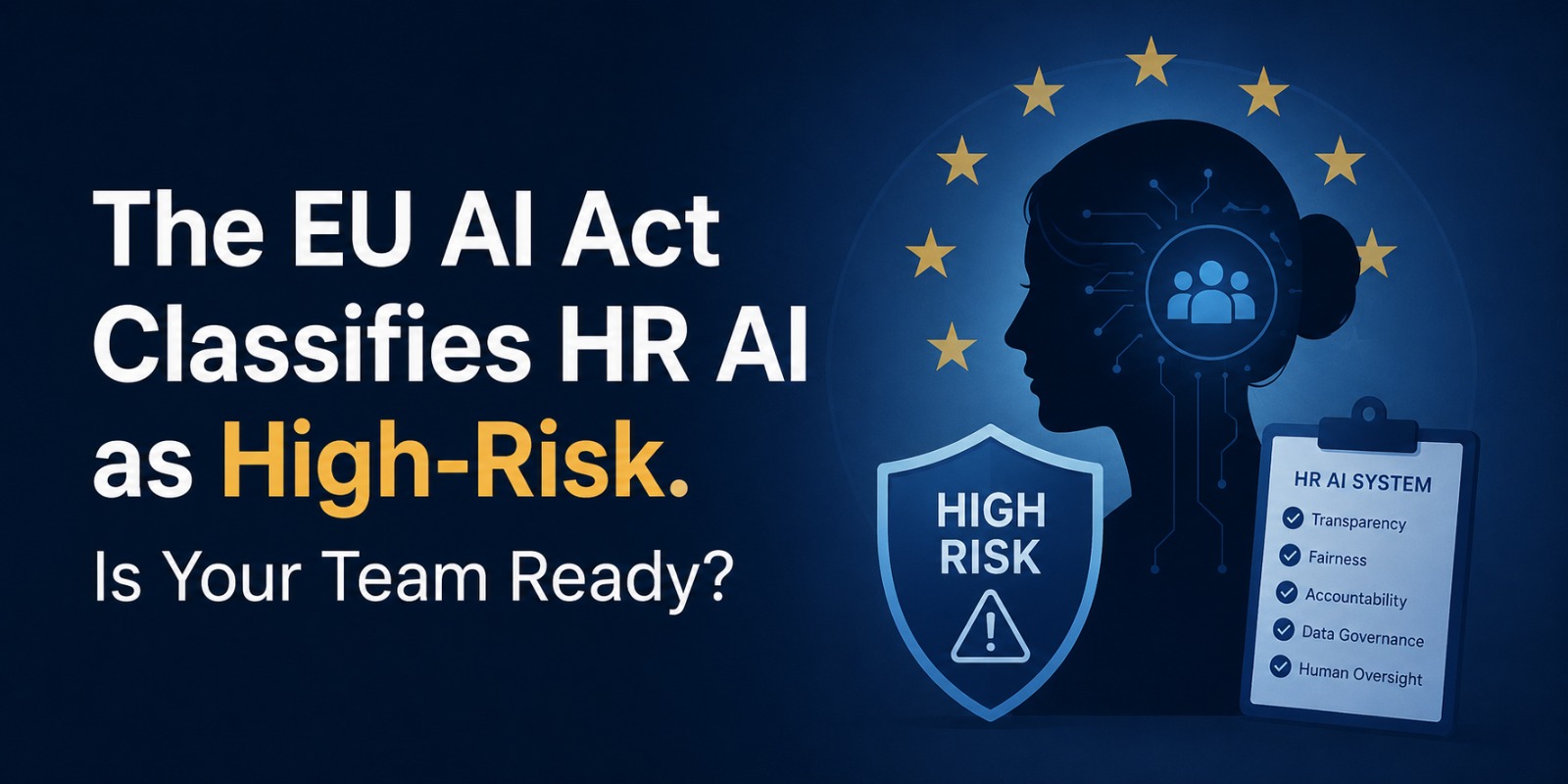
New York City’s Local Law 144, which took effect in 2023, requires employers using automated employment decision tools to conduct annual bias audits and publish summary results. Illinois’ Artificial Intelligence Video Interview Act requires employers to notify candidates when AI is used to analyse video interviews and to obtain their consent. The EU AI Act classifies AI recruitment tools as high-risk systems subject to conformity assessments, transparency requirements, and human oversight obligations.
These regulations share a common principle: algorithmic efficiency does not excuse discriminatory outcomes. The burden of proving that AI-powered hiring is non-discriminatory rests with the employer, not the vendor.
Documented Failures and Lessons
Beyond Amazon, several high-profile cases illustrate the risks. HireVue, a video interviewing platform that used facial analysis algorithms to assess candidates, faced significant criticism from AI ethics researchers and civil liberties organisations. The Electronic Privacy Information Center filed a complaint with the Federal Trade Commission arguing that the technology was inherently biased against candidates with disabilities and those from non-Western cultural backgrounds. HireVue subsequently discontinued its facial analysis feature.
A 2022 audit of a major resume screening tool by researchers at the University of Cambridge found that the system assigned systematically lower scores to candidates with names commonly associated with Black and Hispanic applicants, even when qualifications were identical. The bias was traced to proxy variables in the training data that correlated with race without explicitly referencing it.
These cases share a pattern: the organisations deploying these tools relied on vendor assurances about fairness rather than conducting independent audits. The lesson for HR professionals is clear: vendor claims about AI fairness are marketing statements, not compliance guarantees.
A Six-Step Compliance Framework
Step 1 — Pre-Deployment Assessment: Before any AI recruitment tool is deployed, conduct a formal assessment that evaluates the tool’s training data composition, the variables it uses, the vendor’s bias testing methodology, and the legal implications under applicable employment law. This assessment should involve HR, legal counsel, and a qualified data ethics reviewer.
Step 2 — Adverse Impact Testing: Run the tool against a representative candidate pool and measure selection rates by protected characteristic using the four-fifths rule as a baseline. If disparate impact is detected, the tool should not be deployed until the bias is addressed or a legally defensible business necessity justification exists.
Step 3 — Candidate Notification and Consent: Inform candidates in writing that AI is used in the assessment process, what role it plays, and what human oversight exists. In jurisdictions where consent is required (Illinois, EU member states), obtain explicit consent before AI assessment begins.
Step 4 — Human-in-the-Loop Design: AI should inform recruitment decisions, not make them. Design the process so that AI outputs are presented to human reviewers as one input among several, not as ranked recommendations that bias the reviewer toward acceptance.
Step 5 — Ongoing Audit Cycle: Conduct bias audits at least annually (as required by NYC Local Law 144 and recommended by the NIST framework). Audit results should be reviewed by the AI governance committee and documented for regulatory compliance.
Step 6 — Vendor Accountability: Include contractual provisions requiring vendors to disclose training data composition, bias testing results, and any known limitations. Require vendors to indemnify the employer for discriminatory outcomes attributable to the vendor’s algorithm. Most current vendor contracts do not include these provisions; negotiating them is an immediate priority.
The Candidate Experience Dimension
Compliance is necessary but insufficient. The candidate’s experience of AI-powered hiring shapes employer brand in ways that extend far beyond the individual interaction. Research from Gartner (2024) found that candidates who perceive the hiring process as opaque or impersonal are 38 percent less likely to accept an offer and 64 percent more likely to share a negative experience publicly.
AI-powered hiring that is transparent, respectful, and demonstrably fair can enhance employer brand. AI-powered hiring that feels like a black box where human judgment has been removed creates reputational risk that no efficiency gain can offset.
In my experience managing recruitment operations across multiple APAC markets, the organisations that communicate proactively about AI’s role in their hiring process — explaining why they use it, what it assesses, and how candidates can request human review — report higher candidate satisfaction and lower offer decline rates than those that deploy AI without disclosure.
Conclusion
AI in recruitment is not inherently problematic. It becomes problematic when deployed without governance, without auditing, and without transparency. The regulatory direction is clear: employers will be held accountable for the fairness of their AI-powered hiring, regardless of whether the bias originates in their own data or their vendor’s algorithm. HR professionals who build compliance frameworks now — before regulatory enforcement intensifies — will protect their organisations from legal liability, protect candidates from unfair treatment, and build employer brands that attract rather than repel talent. Efficiency without fairness is not progress. It is discrimination at scale.
The views expressed are my own and do not necessarily reflect the views of my employer.
Assisted by AI, reviewed and approved by me.
References
EEOC. (2023). AI and Employment Selection. Technical Assistance.
Dastin, J. (2018). Amazon scraps secret AI recruiting tool. Reuters.
Raghavan et al. (2024). Mitigating Bias in Algorithmic Hiring. FAccT.
NYC Local Law 144. (2023). Automated Employment Decision Tools.
EU AI Act. (2024). Regulation 2024/1689. Annex III.
Illinois AI Video Interview Act. (2020). 820 ILCS 42.
Gartner. (2024). Candidate Experience in AI-Powered Hiring.
Cowgill, B. (2020). Bias and Productivity in Algorithms. Columbia.
NIST. (2023). AI RMF 1.0.
SHRM. (2026). State of AI in HR.
Global People Operations Leader with 10+ years of experience across APAC and remote-first organizations. Specializing in Workday, employee lifecycle management, and people-first HR operations. Connect on LinkedIn