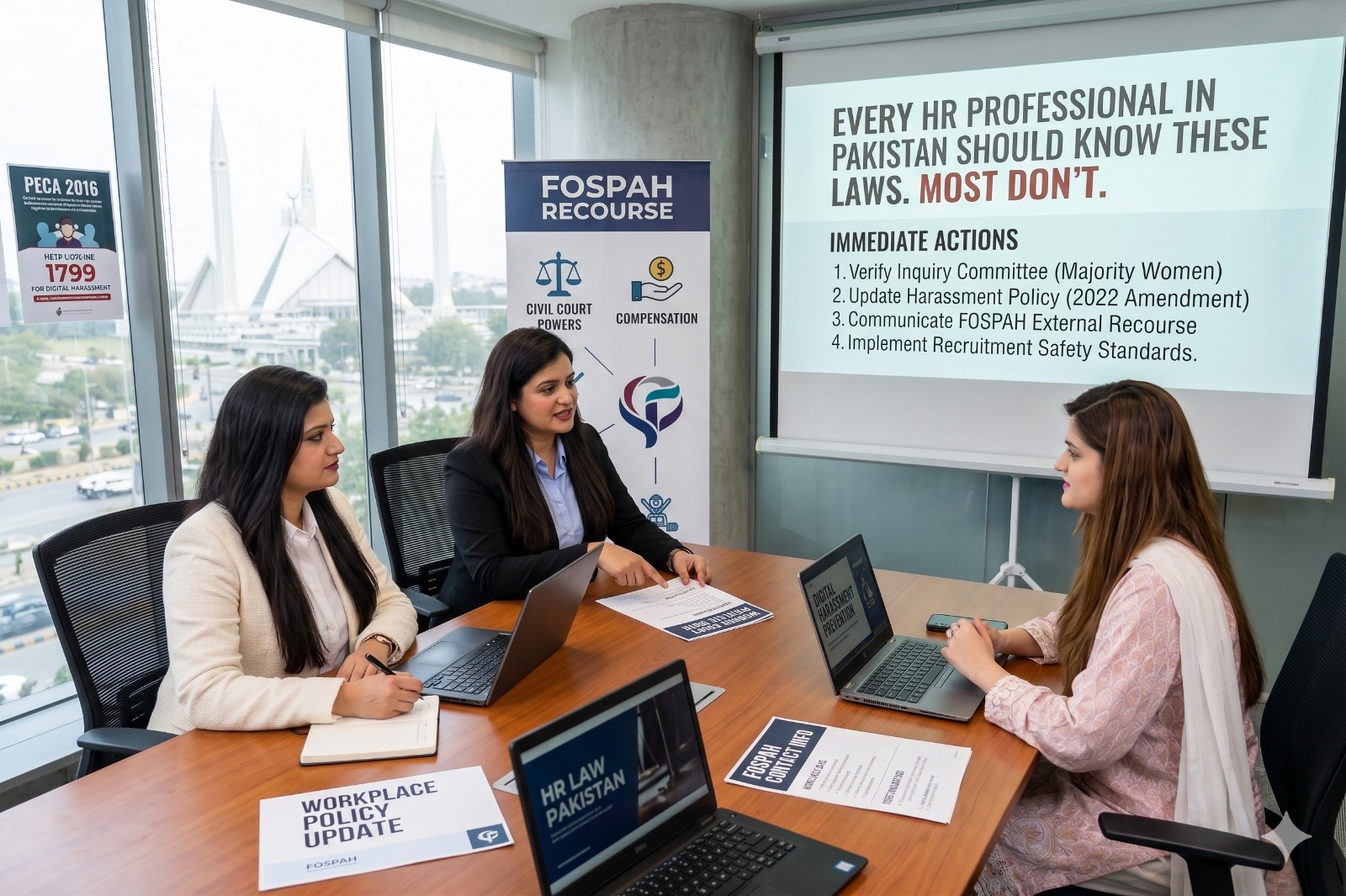
When a workplace harassment case makes headlines, the public reaction is always the same: outrage, calls for change, and then silence. But the conversation HR professionals should be having is different. It is not about whether the laws exist. They do. The conversation should be about whether HR teams are actually implementing them.
The Protection Against Harassment of Women at the Workplace Act 2010, amended in 2022, is one of the strongest pieces of employment protection legislation in South Asia. The 2022 Amendment expanded the definitions of workplace, employee, and harassment to cover situations the original Act missed including informal workers, freelancers, trainees, and any situation linked to work activity outside the office.
Here is what every HR professional managing a team in Pakistan should know and be implementing right now.
The Inquiry Committee Is Not Optional
Every organisation with ten or more employees is legally required to have a functioning Inquiry Committee with a majority of women members. This is not a recommendation. It is a statutory requirement under the Act. The committee must be communicated to all employees. They must know it exists, who sits on it, and how to access it. If your organisation does not have one, it is in violation of the law today.
FOSPAH Exists for a Reason
The Federal Ombudsperson Secretariat for Protection Against Harassment has the same powers as a civil court. It can summon witnesses, demand evidence, and order compensation. If an organisation has no inquiry committee, or if the accused is in a position that compromises the committee’s independence, employees can approach FOSPAH directly. Most employees have never heard of FOSPAH. That is an HR communication failure.
Digital Harassment Is a Criminal Offence
The Prevention of Electronic Crimes Act 2016 covers cyberstalking, digital blackmail, and the creation or distribution of fabricated explicit imagery. Offenders face up to three years imprisonment and fines up to two million rupees. The National Cybercrime Reporting Helpline 1799 accepts complaints by phone and online. In an era where AI can generate fabricated images in seconds, HR policies must explicitly address digital forms of harassment. Most employee handbooks do not mention this. They should.
Recruitment Safety Is an HR Responsibility
A legitimate professional interview takes place at the company’s official premises during business hours with other staff present, or through a verified company video platform. Any request to meet at an informal location particularly for a so-called final round is a warning sign, not a professional practice. HR teams should communicate these standards clearly to every candidate entering the recruitment process.
What HR Should Be Doing Right Now
Verify that your Inquiry Committee exists, is properly constituted, and is communicated to every employee. Update your harassment policy to reflect the 2022 Amendment and to explicitly address digital harassment. Ensure every employee knows about FOSPAH as an external recourse. Include recruitment safety guidance in your candidate communications. Document, train, repeat.
The law is there. Implementation is the gap. And implementation is what HR exists to do.
The views expressed are my own and do not necessarily reflect the views of my employer.
Assisted by AI, reviewed and approved by me.
Global People Operations Leader with 10+ years of experience across APAC and remote-first organizations. Specializing in Workday, employee lifecycle management, and people-first HR operations. Connect on LinkedIn