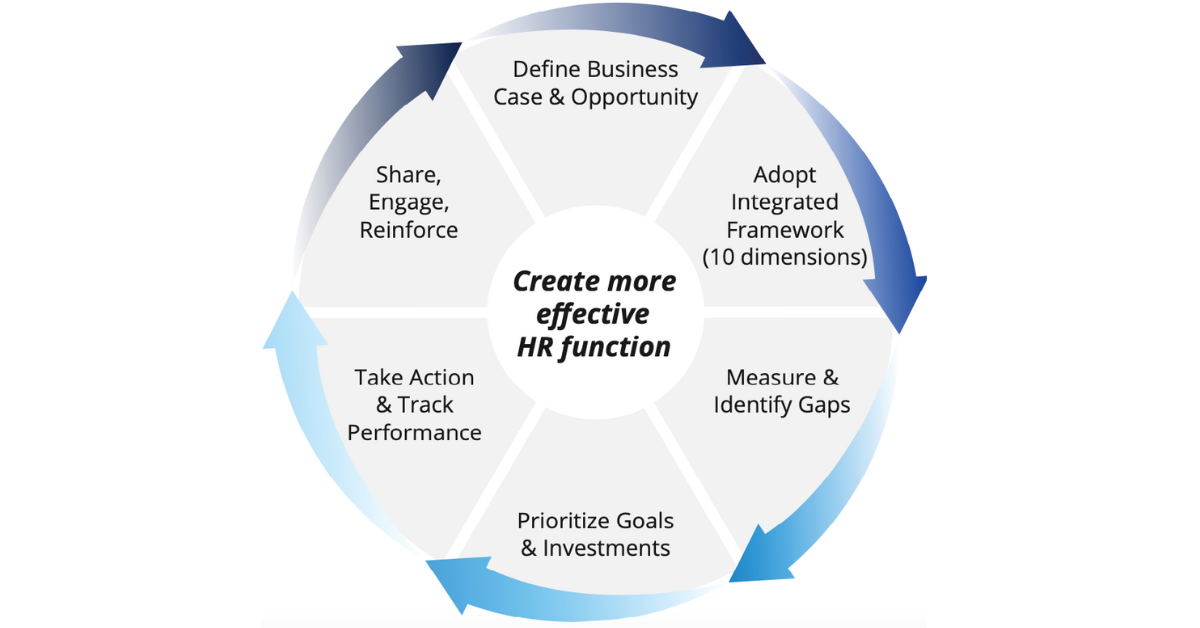
AIHR’s 2026 trends research found that 89% of HR functions have already restructured or plan to do so within the next two years. That is not incremental change. That is a profession-wide redesign.
The traditional HR operating model siloed teams for recruitment, learning and development, rewards, performance, and compliance was built for an era where each function could operate independently with clear boundaries and predictable workloads.
That era is ending.
AI is blurring the boundaries. When your HRIS can surface insights that span recruitment, performance, retention, and skills development simultaneously, the question becomes: why are the teams that act on those insights still separated?
What Restructuring Looks Like in Practice
The emerging model is not a simple reorganisation chart. It is a fundamental shift in how HR work is organised. Leading organisations are moving away from traditional Centres of Excellence and toward agile, cross-functional teams where HR professionals from different specialities work on shared business challenges. A retention problem, for example, is not solely a talent acquisition issue or a rewards issue or a manager development issue. It is all three, and the team addressing it should reflect that.
Google reduced its population of small team managers by more than a third. The number of managers globally has dropped over 6% in the past three years. AI platforms are connecting data and workflows across the entire employee lifecycle, which raises the bar for integration and makes specialist silos harder to justify.
What This Means for Individual HR Professionals
The career implications are significant. The HR professional who has built a career as a specialist in one domain recruitment, or compensation, or learning will need to develop cross-functional capability to remain competitive. The most valuable HR professionals in 2028 will not be deep specialists in isolation. They will be professionals who can work across domains, connect data from multiple HR systems, and translate workforce insights into business recommendations.
This does not mean depth stops mattering. It means depth alone is no longer sufficient. The combination of deep expertise in one area plus working knowledge across others is what the restructured HR function demands.
For anyone in HR evaluating their career trajectory: this is the moment to build breadth alongside depth. The organisations restructuring around you will reward professionals who can connect, not just execute.
Global People Operations Leader with 10+ years of experience across APAC and remote-first organizations. Specializing in Workday, employee lifecycle management, and people-first HR operations. Connect on LinkedIn